
Employer Sponsorship Explained: Understanding Subclass 482, 186, and 494 Visas
Employer-sponsored visas play a significant role in Australia’s migration system by helping businesses address genuine skill shortages while offering skilled workers opportunities to live and work in the country. For employers, sponsorship provides access to global talent when local candidates are not available. For skilled workers, it offers structured employment pathways that can potentially lead to long-term settlement in Australia.

However, employer sponsorship is not simply a recruitment process. It is a regulated migration pathway that requires employers and sponsored workers to meet specific legal requirements, financial obligations, and compliance standards. Understanding how these visas operate and the responsibilities that come with them is essential for both parties.
Employer-Sponsored Visa Pathways
Australia offers several employer-sponsored visa options, each designed to support different business needs and workforce strategies.
Skills in Demand visa (Subclass 482)
The Skills in Demand visa (Subclass 482) allows Australian employers to sponsor skilled overseas workers to fill positions they cannot source locally. It operates across multiple streams, including Short-Term, Medium-Term, and Labour Agreement streams.
This visa is NOT limited to Labour Agreements. It includes multiple streams such as Short-Term, Medium-Term, and Labour Agreement streams. It generally allows workers to live and work in Australia temporarily for up to four (4) years, although visa length may vary depending on occupation and passport type.
Visa holders under this visa can:
Work only for their sponsoring employer
Study (without access to government financial assistance)
Travel in and out of Australia while the visa is valid
Be eligible for permanent residency pathways, such as the Employer Nomination Scheme (Subclass 186), depending on eligibility
To be eligible, applicants must:
Be nominated for an eligible occupation
Meet skills, qualifications, and experience requirements
Have at least 12 months of relevant work experience in most cases (unless exemptions apply)
Meet English language requirements unless exempt
Obtain a skills assessment if required for the occupation
Employer Nomination Scheme (ENS) (Subclass 186)
The Subclass 186 visa allows Australian employers to sponsor skilled workers for permanent residency. This visa is typically used when businesses wish to retain skilled employees for long-term roles within their organisation.
There are several streams under the ENS visa, including:
Temporary Residence Transition (TRT) stream is designed for skilled workers currently on a temporary employer-sponsored visa who want to transition to permanent residence. Eligible applicants must generally hold a Subclass 457 or Subclass 482 visa (or eligible related visa) and have worked full-time in sponsored employment for at least two (2) years with their sponsoring employer. Nomination by the sponsoring employer is required for this stream.
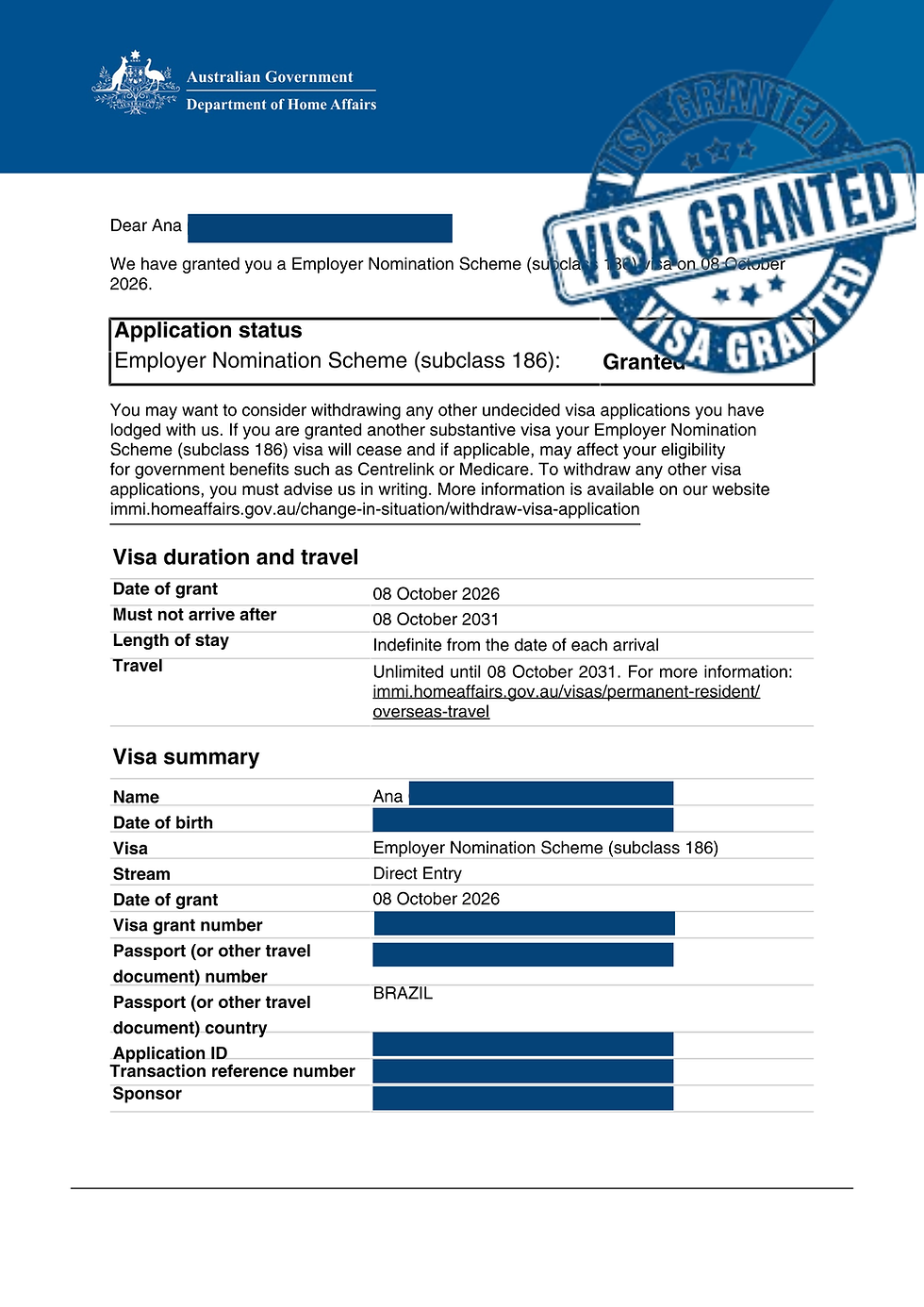
Direct Entry stream is for skilled workers who are nominated by an employer and wish to apply directly for permanent residence. Applicants must be nominated by an Australian employer, have an occupation listed on the relevant skilled occupations list, and meet at least the Competent English requirement.
Labour Agreement stream applies to skilled workers who are nominated by employers with a formal labour agreement in place with the Australian Government. This stream is suitable for workers who are currently employed, or who will work, for an employer that has an active labour agreement.
Skilled Employer Sponsored Regional (Provisional) Visa (Subclass 494)
This visa allows employers in designated regional areas of Australia to address labour shortages by sponsoring skilled overseas workers where suitably qualified Australian workers are not available.
Labour Agreement Stream This stream applies to skilled workers nominated by employers who have a formal labour agreement with the Australian Government, represented by the Department of Home Affairs. The sponsoring employer must have an active labour agreement in place.
Employer Sponsored Stream Visa holders can live, work, and study only in designated regional areas of Australia. Eligibility for permanent residency is not automatic after three (3) years; it depends on meeting specific income, employment, and visa conditions over time.
Subsequent Entrant Stream This stream is for family members of a Subclass 494 visa holder who apply separately to join the primary visa holder in Australia. Applicants must be included within the family group of the main visa holder.
Employer Obligations Under the Sponsorship Program
Employers must meet strict sponsorship obligations, including providing the correct salary, maintaining appropriate employment conditions, and fulfilling reporting and record-keeping requirements.
Sponsored employees are required to work only in their approved role, comply with all visa conditions, and inform relevant authorities of significant changes, such as updates to their employment or personal circumstances.
Having a clear understanding of these responsibilities helps ensure a compliant, stable, and legally sound working arrangement throughout the sponsorship period.
It’s important to do each step correctly and follow Australia’s migration rules. Getting advice from an expert can help workers and employers go through the sponsorship process smoothly, avoid problems, follow the law, and plan for long-term work and living in Australia.
For clarification, personalised advice and step-by-step support, consider consulting a registered migration agent, as immigration regulations may change over time. To ensure you meet the current eligibility criteria and receive personalized guidance, we recommend consulting with Australian Portal Immigration. You can book your appointment here.


Comments